Most homeowners hear the same warning the moment they mention renovating in a premium suburb: “Careful… you don’t want to overcapitalise.” But here’s why overcapitalised suburbs can deliver big returns.
It comes from well-meaning friends, family, even professionals. And on the surface, it sounds sensible: spend too much in the wrong area, and you’ll never get it back… right?
The funny thing is, the suburbs people are most afraid of overcapitalising in are often the ones where smart renovations pay off the most.
Why? Because high-value suburbs play by a different set of rules – rules most renovation advice never accounts for.
Let me explain…
Most Renovation Advice Is Built Around A Simple Idea: Don’t Spend More Than The Area Can Support
That’s good advice – in the right context.
But premium suburbs don’t behave like average markets. Because once prices cross a certain threshold, the usual rules start to bend.
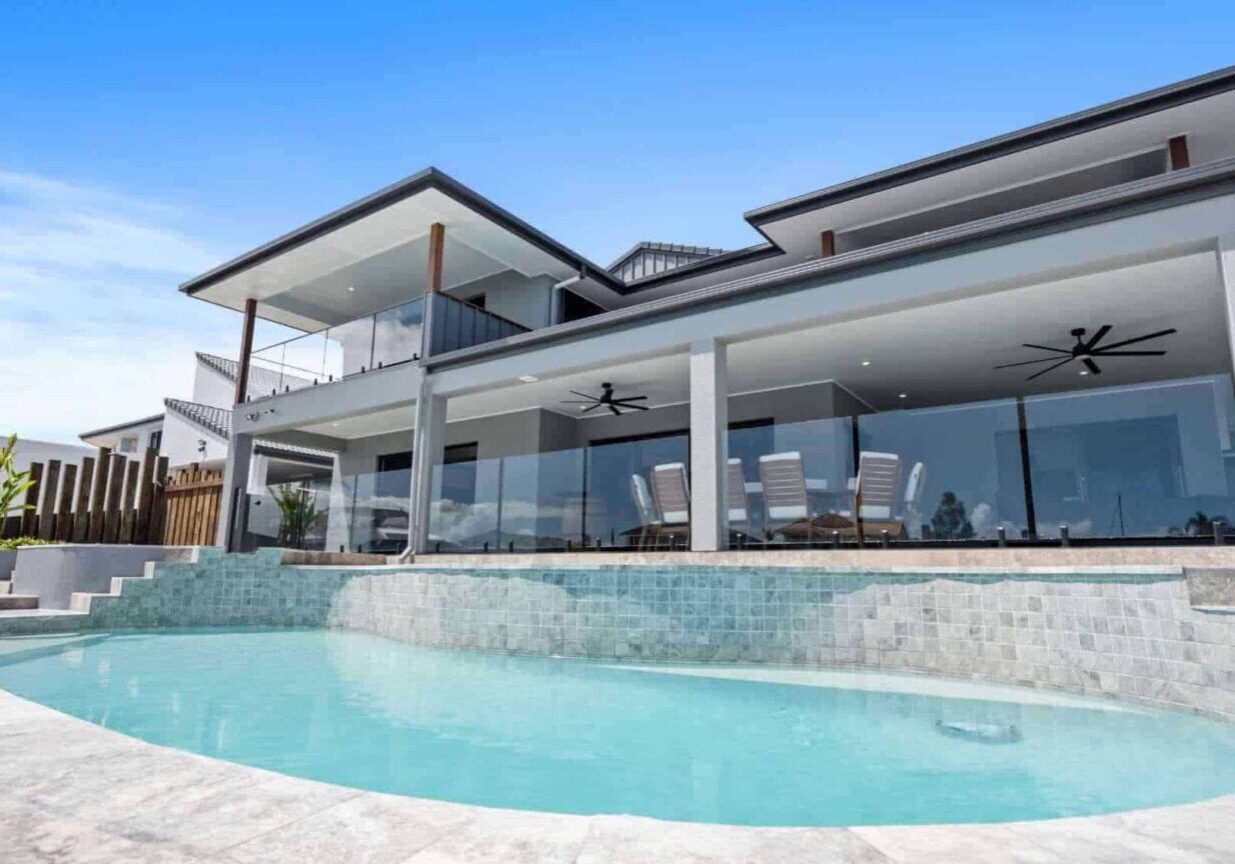
For instance, in places like Raby Bay, the entry price already sets a very high baseline. You’re not buying a bargain home and hoping renovations lift it into a new bracket. Instead, you’re buying into a location where value is already established, demand is consistent, and buyers have clear expectations.
There are three reasons that changes everything:
Reason #1: The market already expects quality.
In premium suburbs, buyers aren’t comparing your home to entry-level stock. They’re comparing it to other high-quality homes nearby. That means good layouts, solid extensions, and finishes that feel appropriate for the location aren’t seen as “extras”. Actually, they’re assumed. Pulling back on quality to avoid overcapitalising can actually work against you.
Reason #2: Renovations are absorbed differently when entry prices are high.
When homes are selling north of $2 million, a well-considered renovation isn’t scrutinised the same way it might be in a lower-priced suburb. Buyers aren’t asking, “Was this too expensive?” They’re asking, “Does this home feel complete?” If it does, the market tends to absorb the spend far more smoothly.
Reason #3: You’re upgrading a good asset – not rescuing a bad one.
Many homes in these areas are structurally sound and well located, but tired. So the renovation isn’t about fixing fundamental problems, but rather bringing the home back in line with how people actually want to live today. That’s a very different risk profile to renovating a compromised property in a weaker location.
OK, but what about knockdowns?
If we’re already talking about serious money in a premium suburb, wouldn’t it be safer to knock the house down and start again? Do the same rules still apply?
They do – but with a lot more to consider…
A Knockdown Doesn’t Remove Overcapitalisation Risk. It Just Changes The Shape Of It.
When you knock down and rebuild, you’re committing a much larger chunk of capital up front. And while the result might be new, the market still applies a ceiling.
Buyers don’t pay based on how much effort or money went into the build – they pay based on how the home compares to others in the area.
In premium suburbs like Raby Bay, buyers expect quality, but they don’t endlessly reward excess. Which means a beautifully renovated home and a brand-new build can end up competing for the same buyer if they deliver a similar lifestyle, layout and level of finish. From the market’s point of view, the outcome matters more than the process.
This is why knockdowns can actually increase exposure if you’re not careful. The jump from a substantial renovation to a full rebuild is often hundreds of thousands more, and that extra spend doesn’t automatically translate to extra value if the end result isn’t meaningfully different to what the market already accepts.
That doesn’t mean knockdowns are the wrong choice. Far from it.
They make sense when:
- the existing structure is compromised
- when planning constraints limit what a renovation can realistically achieve, or
- when renovation costs are genuinely approaching rebuild territory without delivering the same outcome
This is where many homeowners get tripped up. They assume “new” automatically means “safer.” In reality, the same principle applies as before: spend where it counts, and be clear on what the market actually values.
Bottom Line: Overcapitalisation Isn’t a Spending Problem. It’s a Thinking Problem.
Most people approach renovations in premium suburbs asking the same question:
“How do we avoid overcapitalising?”
But that question assumes the risk is in the spending.
What I’ve seen time and time again is that the real risk sits somewhere else entirely – in applying one-size-fits-all advice to markets that don’t behave like the rest.
And in premium suburbs like Raby Bay, where the numbers are bigger, expectations are higher, and outcomes are judged differently, the mistake isn’t investing in quality, but in failing to understand what the market already assumes will be there.
Once you look at it that way, the question shifts from “Will we overcapitalise?” to “Are we making decisions based on how this market really works?”
And that’s a far more useful place to be.
Of course, there’s a lot more to making smart renovation decisions than we’ve been able to cover here, especially when you’re building or upgrading in a premium suburb.
That’s why I’ve put together a free guide you can download:
The 5 Mistakes People Make When Planning Their Renovation (And How to Avoid Them)
Inside, I walk through:
- The most common mistake people make when trying to “play it safe” and how it quietly costs them in the long run
- What most families underestimate about living through a renovation (and how to plan for it without the stress)
- Why choosing a builder who only dabbles in renovations can lead to costly missteps
- The overlooked factor that matters more than price, inclusions, or promises when making renovation decisions
If you’re planning a renovation in a higher-value area, this guide will help you avoid the traps that catch people out when fear starts driving the process.
For further guidance on choosing reputable builders and avoiding budget builders trick, explore resources from the Association of Professional Builders and Master Builders Queensland.