
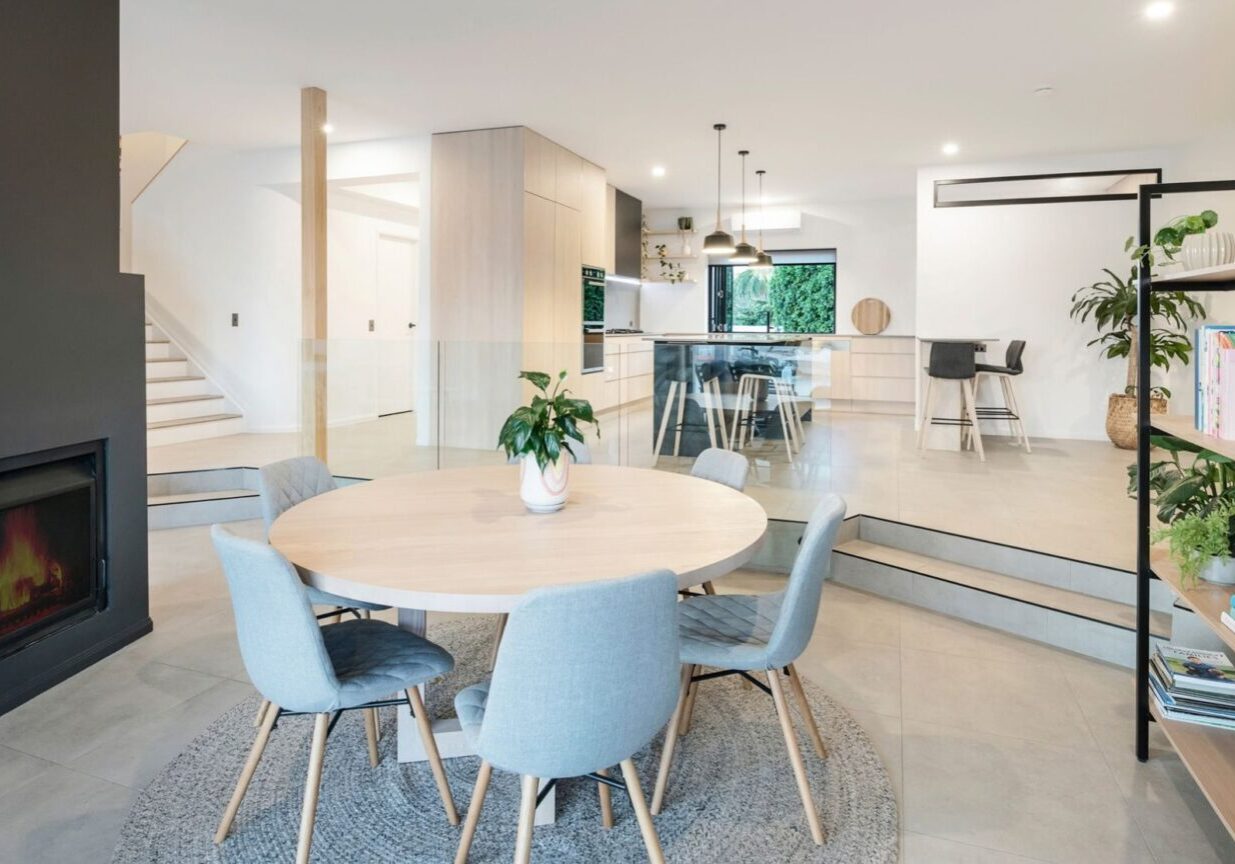
Your selections can move a renovation by $30,000, $40,000 or even $60,000 without the finished home looking dramatically different. Once you know which of those decisions is carrying the money, you can stop feeling guilty about the ones that aren’t.
There are two types of clients who come to us with selections. Some have a full document from a designer, with every tile, tap and light fitting already chosen. Others have nothing but a Pinterest folder.
Both end up in the same place, because selections are where a renovation budget is made or broken. Five grand here, three grand there, and it adds up quicker than most people expect. It’s not long before you’re looking at a $60,000 variance, and a variance that size can be the difference between a project going ahead and a project going back on the shelf.
What catches people out is where that $60K actually comes from.
In most cases, it isn’t the item they’d been feeling guilty about.
Look at the Price. Then Look at How Much of It You Need.
Say you’ve found a splashback tile at $500 a square metre. That’s expensive for a tile.
But if that splashback is two square metres, go for it. You love it, it’s going to look great, and two square metres of tile isn’t going to blow the budget apart in the scheme of a whole project.
Now put the same tile on every bathroom wall in the house. Different story.
The price on the sample tells you very little on its own. What matters is that price multiplied by the area it has to cover. That single piece of maths is what separates the selections you can make on feel from the ones worth a proper conversation first.
Cabinetry Is Where the Money Is Actually Sitting
If you want to find $30,000 or $40,000 in a renovation, start with the cabinetry and the stone tops.
The decision that usually sits there is two-pack versus laminate. Two-pack is a painted finish. It’s the higher-end option, and there’s a lot of money tied up in it. There are also laminate options now that look just as nice.
Flooring behaves the same way. Running one product through the house rather than changing between rooms has saved clients around $30,000, and nobody has walked in afterwards thinking the house looked cheap.
Flagged, Not Removed
When we price a selections document, we go through it against the budget you’ve told us and highlight anything out of the ordinary. Sometimes there’s 40 or 50 per cent to be saved by using a different product.
We’ve had light fittings come through at $2,500 each. They don’t get taken out. You get shown that they’re in there, and then it’s your call. Plenty of clients keep them, which is a perfectly good answer, as long as it was a decision rather than something you discovered later.
That’s the line between saving money and settling for less. Spend properly on what you’ll notice every day. Ease off where you won’t.
Where a Saving Stops Being a Saving
Two things tend to catch homeowners out when they go looking for a better price themselves.
The first is standards. Items brought in from overseas often don’t meet Australian plumbing standards, which means they can’t be installed. The price was better. The product still can’t go in the house.
The second is availability. A tile coming from Melbourne can hold a job up for weeks, because a tile is normally chosen as a decision about how the room will look, not about when the room will be finished.
Then there’s the one that costs the most.
We had a client who wanted air conditioning put back in after it had come out of the original quote. They went to their own supplier, came back with a price three grand under ours, and were adamant about using it. It’s their home and their money, so we made sure the inclusions were clear and left it with them.
The unit turned out to be the wrong size for the house. Their price also didn’t allow for the ceiling work or the structural work needed to install it, both of which were sitting inside our number.
It ended up costing more than our original quote.
The three grand was real. It just wasn’t the whole picture, and the parts sitting outside the picture were larger than the saving.
Bottom Line: Spend It Where You’ll Feel It
Selections are one of the fastest places for a renovation budget to move, and most of the job is knowing which decisions are carrying the weight.
The same is true of the decisions made long before you’re picking tiles. How the scope is set. What gets staged and what stays together. What the quote actually covers, and who wears the cost when something turns up behind a wall.
That’s why we put together a free guide:
The 5 Mistakes People Make When Planning Their Renovation, and How to Avoid Them
It walks through the early decisions that shape everything after them, so the money in your renovation ends up in the parts of the home you actually care about.
Grab your free copy here and start your project with a clear idea of where your budget is really going.
Before you lock in your selections, you can check how products are certified for plumbing use on the Australian WaterMark certification scheme.
Planning a renovation in the Redlands or Brisbane southside? Contact Swanson Constructions or call us on 0489 080 958 to find out where your budget is really going.
Renovation Selections and Budget: Common Questions
How much can renovation selections move a budget?
Selections can shift a renovation by $30,000, $40,000 or even $60,000 without the finished home looking dramatically different. The money usually sits in a few big decisions, like cabinetry, stone tops and flooring, not in the one tile or tap you feel guilty about. Knowing which decisions carry the weight is most of the job.
Does one expensive tile blow a renovation budget?
Not on its own. What matters is the price multiplied by the area it covers. A $500 a square metre tile on a two square metre splashback barely moves the budget, but the same tile on every bathroom wall is a very different number. That one calculation separates choices you can make on feel from ones worth discussing first.
Where is the biggest saving in renovation selections?
Cabinetry and stone tops, where choosing laminate over two-pack can free up $30,000 or $40,000. Flooring works the same way. Running one product through the house instead of changing room to room has saved some of our clients around $30,000, and nobody walked in afterwards thinking the home looked cheap.
Will your builder remove expensive items from your selections?
No. When we price a selections document we compare it with your budget and flag anything out of the ordinary, such as light fittings at $2,500 each. Sometimes 40 or 50 per cent can be saved with a different product. Nothing is taken out. You see it, then it is your call.
Is it cheaper to buy your own fittings and appliances?
Not always. Items from overseas often do not meet Australian plumbing standards, so they cannot be installed, and a tile coming from Melbourne can hold a job up for weeks. One client’s own air conditioning supplier was three grand cheaper, but the unit was the wrong size and the ceiling and structural work was not included.
Related Articles