There was a renovation in Crystal Street, Holland Park, that came very close to not going ahead.
The family had already invested in plans. They were emotionally committed, and they could see the finished home in their minds.
Then the numbers came back, and everything paused.
It wasn’t just a small change. It was the kind of gap that makes you stop and think seriously about what to do next.
And when a renovation stalls at that stage, it’s not just inconvenient. It’s expensive in time, energy, and momentum.
Over the years, I’ve seen a few patterns quietly derail high-end renovations. They don’t look like obvious mistakes. Most of the time, they feel sensible in the moment.
The thing is, when those early decisions aren’t aligned properly, the consequences show up later, in the budget, in the timeline, and often in the stress that starts to overshadow the excitement.
If you’re planning a renovation in Holland Park or Brisbane’s south-east, these are worth thinking about now, before drawings are underway.
Silent Killer #1: Designing Without Lifestyle Flow
When people talk about adding value, they often focus on finishes, stone benchtops, tapware, and high-end fittings.
But fancy finishes can’t fix a layout that doesn’t work.
Homes built 20 or 30 years ago were designed for a different lifestyle. Kitchens were separate, outdoor areas didn’t connect well, and families entertained differently.
We often walk into homes where:
- The kitchen feels cut off from the rest of the house
- Outdoor space doesn’t connect naturally to living areas
- Teenagers and parents compete for the same zones
- And the layout feels fragmented rather than cohesive.
You can spend a lot upgrading surfaces in a home like this and still feel like something’s missing.
And in my years in the industry, I’ve come to learn that “something” is flow.
- A long island bench where people gather without being told to.
- Large sliding doors that open to a deck, making inside and outside feel like one space.
- Clear zones that give privacy without making anyone feel cut off.
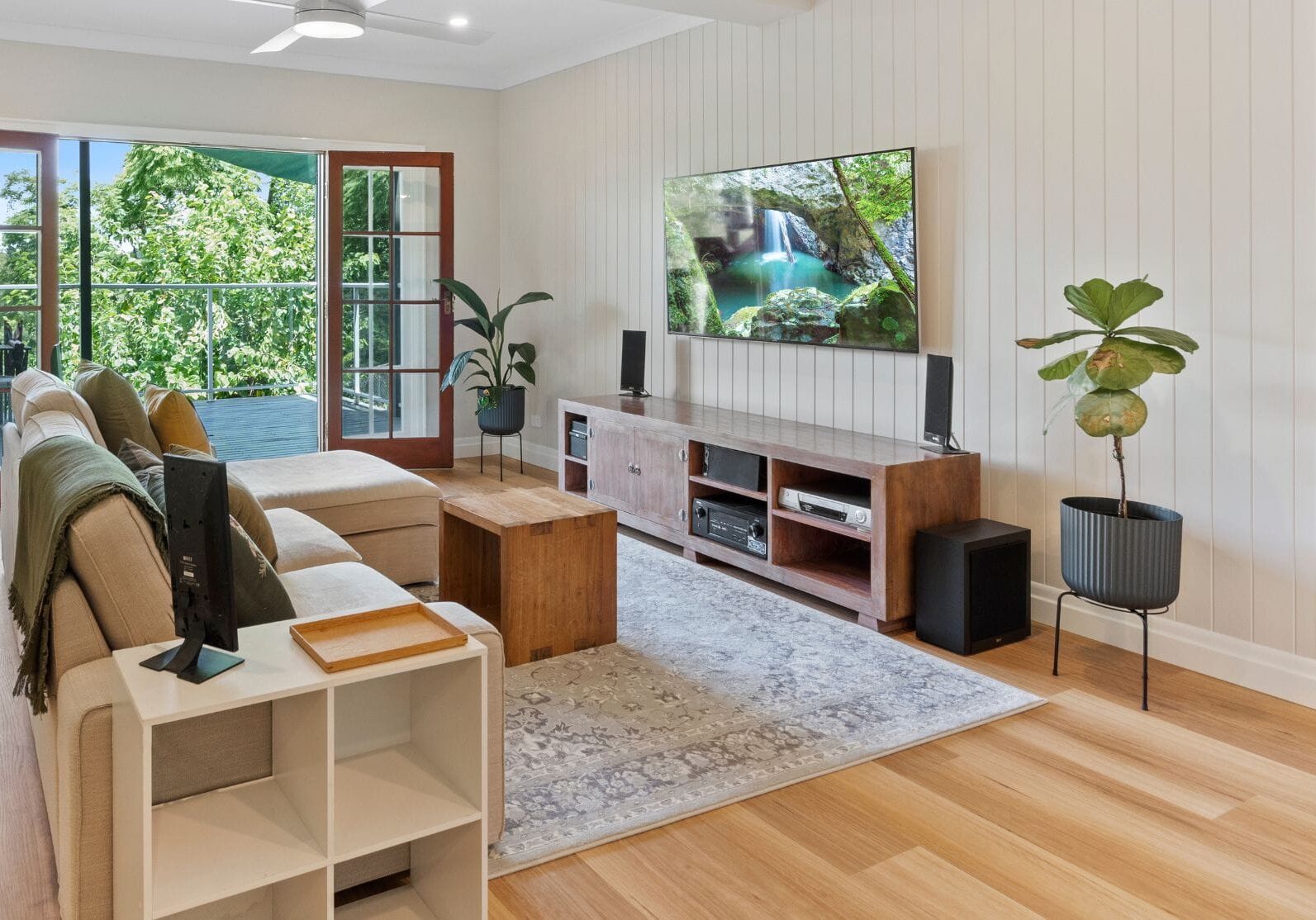
On Crystal Street, the original Queenslander had a small kitchen with little connection to the outdoors. When we opened it up and connected the deck to the living space, the whole home changed.
And look, this isn’t about chasing trends. It’s about making sure the biggest structural decisions support how you actually live.
When the layout works, the renovation feels worth it. If it doesn’t, even expensive finishes can’t make up for it.
Silent Killer #2: Spending Without a Strategy
People often assume a high-end renovation means upgrading everything.
But that approach can quickly blow out your budget, and it doesn’t always add real value.
In reality, the best renovations aren’t about how much you spend, but how wisely you spend it.
It’s about knowing which parts make a real difference and which just use up your money.
A smart approach often includes:
- Investing properly in the kitchen, because it anchors the home
- Choosing quality fixtures that fit, without always picking the most expensive ones
- Using standout features in a few places, not all over the house
- Repurposing existing spaces instead of rebuilding unnecessarily.
At Crystal Street, we reconfigured the upper level to bring the kitchen, dining, and lounge together into one cohesive living space.
This change, along with the extension, gave us the freedom to completely rebuild the master wing, creating a more considered retreat with its own ensuite and walk-in robe, and a far better sense of flow throughout the home.
If we had just upgraded everything, costs would have gone up without really improving the result.
See, high-end doesn’t mean expensive everywhere. It means making smart choices that support your vision and keep your budget in check.
Silent Killer #3: Delaying the Budget Conversation
This is where Crystal Street nearly stopped altogether.
The clients had hired an architect and paid for detailed plans. The drawings were thoughtful and matched everything they wanted.
But when we came in to price the build, it was about two to two-and-a-half times more than they were ready to spend.
That’s a big gap… the kind that can put a project on hold for a very long time.
There was nothing wrong with the design itself. In fact, it was absolutely beautiful. The challenge was alignment, because the scope and the budget had never been clearly defined together.
This tends to happen when:
- A realistic build budget isn’t established at the outset
- Builder input isn’t included during design development
- Scope expands without cost checkpoints
- Emotional investment builds before financial clarity.
Architects design and builders deliver. If they don’t talk early, the budget and plans only get compared later, after money is spent and expectations are set.
In this case, we stopped and started over. We clarified the real budget, we focused on the upstairs work first, and the pool was parked for a later stage.
That didn’t mean stripping the vision back to something unrecognisable. The final result still included:
- A large open-plan kitchen
- Strong indoor-outdoor flow
- A new master ensuite
- And an extension that genuinely suited how the family lived.
Once the budget and scope matched, the project moved ahead with confidence.
It could have easily gone the other way. If it had, the lost time, design fees, and emotional energy would have been a big cost.
What This Comes Down To In High-End Renovations
Don’t avoid talking about budget.
It sets the limits for every other decision.
Instead, have an open discussion about what you’re able to spend, and set those parameters early. That way, you can:
- Shape the design around achievable numbers
- Make confident trade-offs without panic
- Focus on what matters most first and add the rest later
- Avoid expensive redesigns and unnecessary strain.
And look, no one likes talking about financial limits. But it’s much easier to have that conversation at the start than after plans are finished and expectations are set.
In complex renovations, getting aligned early protects more than your budget. It keeps things moving.
What We See Go Wrong Before Construction Even Starts
Crystal Street moved forward because we caught the misalignment early.
Not every project does.
Once drawings are done and money is spent on design, it’s harder and often more expensive to step back.
Most renovation stress doesn’t start during construction. It starts in planning, when key assumptions aren’t checked early.
If you’re still early in the process, discussing ideas and meeting designers, this is your chance to avoid becoming the next ‘almost’ project.
If you’re planning a renovation and want to know what trips people up before they build, I’ve put together a free guide:
The 5 Mistakes People Make When Planning Their Renovation (And How to Avoid Them)
It covers the patterns we see again and again, the small mistakes that lead to budget problems, redesign costs, and extra stress.
It’s practical, easy to follow, and made to help you protect your budget and peace of mind before you commit.
For further guidance on choosing reputable builders and avoiding budget builders trick, explore resources from the Association of Professional Builders and Master Builders Queensland.